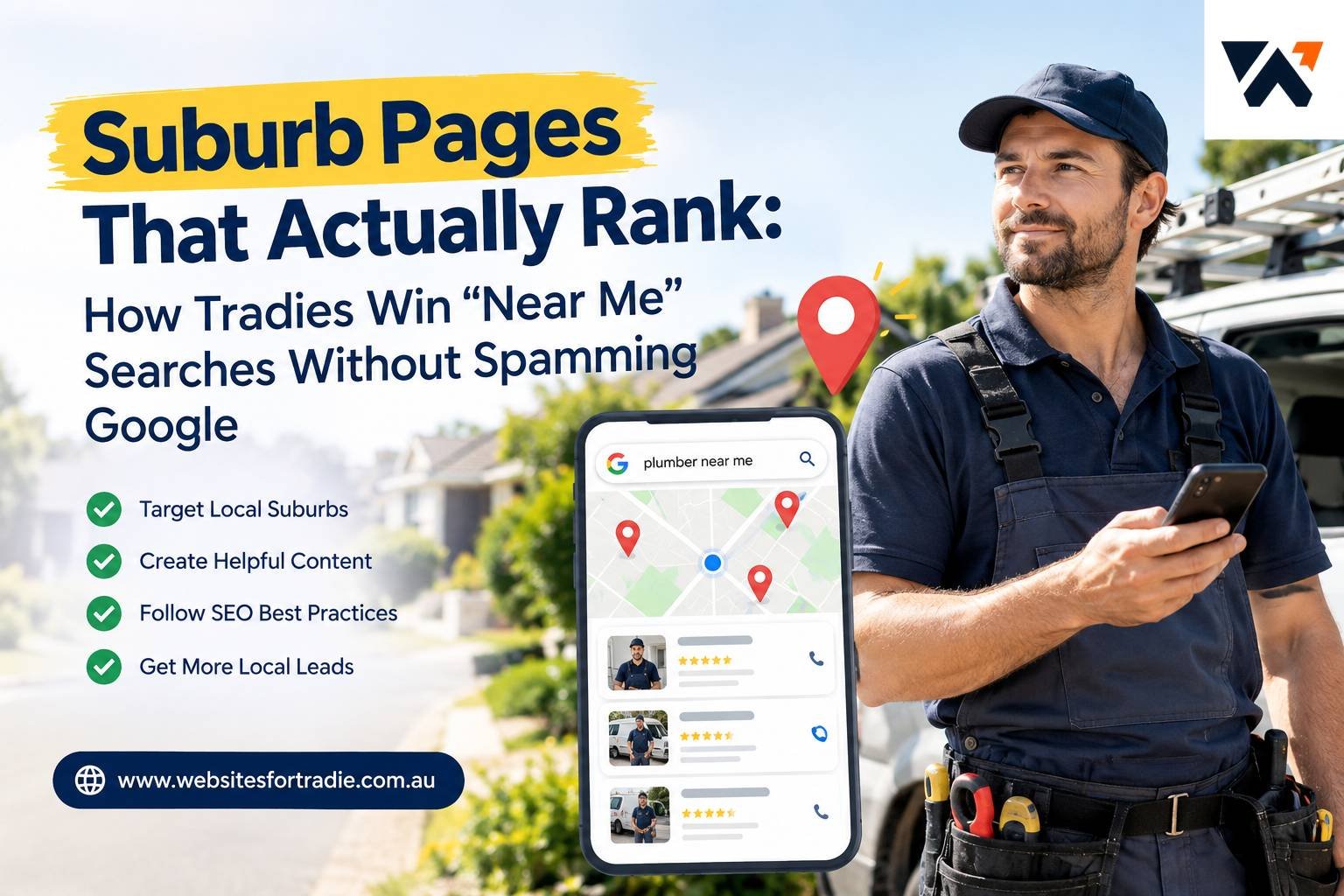
Local customers use Google to find plumbers, electricians, roofers, carpenters and other trade professionals. When a pipe bursts or a roof starts leaking, they need a service provider who covers their area and can handle the job.
For tradies across Australia, these searches offer a chance to reach people who need their services. A well-planned suburb page can help connect a business with customers in its service areas.
However, adding a suburb name to a page does not guarantee a place in Google’s search results. Each page needs a clear purpose, useful information and accurate details about the services you provide.
This guide explains how tradies can build suburb pages that support local SEO, attract relevant visitors and turn website traffic into enquiries.
Why Suburb Pages Matter for Local SEO
Your website requires a suburb page, which should explain the services you provide within particular geographical areas. A plumber would establish a dedicated page for the Preston service area while an electrician should create a separate page to serve Coburg customers.
These pages help customers check whether a business covers their area before they make contact.
Local searches often show a clear need for a service. Common examples include:
- Plumber in Preston
- Electricians near me
- Roof repairs in Werribee
- Carpenter in Box Hill
- Emergency air conditioning repairs in Geelong
Each search is a chance to reach someone who is ready to book.
A BrightLocal study published in July 2026 found that 84% of consumers had searched for a local business online in the previous three months. It also found that three-quarters of people used more than one channel in their latest search.
This finding shows why tradies need more than a website address. Customers may check Google, read reviews and visit a website before they choose a service provider.
A useful suburb page gives them the details they need to make that choice.
What Helps a Suburb Page Rank on Google?
When assessing local results, Google considers three main factors: relevance, distance and prominence. Relevance measures how well a business matches the search made by a user. Distance measures how far the business is from the location of the user making the search. Prominence measures how well-known the business is in the area.
Your website can help Google understand your services and the areas you cover. It cannot control every ranking factor, especially distance.
Start with your real service area. List the suburbs where you take jobs and can offer a reliable service.
For example, an electrician based in Melbourne might serve Preston, Coburg and Brunswick. Each suburb can have its own page, as long as you have useful information for people in that area.
Do not make a page for every suburb in the city just to add more pages to your site. Before you create a page, ask yourself:
- Do we take jobs in this suburb?
- Can we explain the services we offer there?
- Will this page answer questions local customers have?
- Does it add something that our main service page does not?
If the answer is no, you probably do not need a separate page.
2. Give Every Suburb Page a Clear Purpose
Pages for different locations should not repeat the same content with a few words changed.
For example, a page for Preston might explain your electrical repair services, while a page for Coburg could cover the same core services but include a genuine local project or relevant customer questions.
Only include facts you can verify. Do not invent customer stories, local projects or service details.
Google’s spam policies identify doorway abuse as a problem. This includes creating similar pages for specific cities or regions that offer little value and direct visitors towards the same destination.
The key rule is simple: every suburb page should help a customer make a decision.
How to Write a Suburb Page That Gives Customers Useful Information
A strong page answers the questions customers have before they contact a tradie. It should explain your services, show proof of your work and make the next step clear.
3. Focus on the Services Customers Need
Avoid writing broad statements such as “We offer the best trade services in your area”. Tell customers what you do.
A roofing page, for example, could cover:
- Roof leak repairs
- Tile and metal roof repairs
- Roof inspections
- Storm damage repairs, if offered
Explain what each service covers and when a customer may need it. Add information about how to request an inspection or discuss a job.
The building design enables users to connect their location-based search results with the corresponding service pages.
4. Include Genuine Photos and Work Examples
Real photos help customers assess the quality of your work. They also make your page more useful than a block of generic text.
If you have completed a job in the suburb, add a short case study that covers:
- The problem the customer faced
- The work your team completed
- The outcome of the job
- Photos of the finished work, with permission
For example, a plumber could explain how their team found and repaired a leaking pipe in a home in Preston.
If you have not completed work in that suburb, do not claim that you have. You can still explain your service coverage and the types of jobs you accept.
5. Make the Page Easy to Use on Mobile
Many local searches take place on mobile devices. Google’s older mobile search research found that 76% of people who searched for something nearby on a smartphone visited a business within a day. The research dates from 2016, so treat it as historical evidence of local search intent rather than a current forecast.
For tradies, a mobile-friendly website should help customers:
- Call your business with one tap.
- Send an enquiry through a short form.
- Check your services and service areas.
- Read customer reviews.
- Find the information they need without scrolling through long blocks of text.
Good web design for tradies supports this process with clear headings, readable text and simple navigation.
How to Avoid Repeated Content Across Suburb Pages
Publishing more pages does not guarantee more traffic. A large set of pages with the same text can make your website harder to manage and offer little value to visitors.
Use these steps to keep your location pages useful.
6. Write Natural Content Without Keyword Stuffing
Use the suburb name in the page title, main heading and relevant sections. Include your main service where it fits the sentence.
For example:
“Need an electrician in Coburg? We provide lighting installation, electrical repairs and switchboard upgrades for homes and businesses in our service area.”
This sentence tells visitors what you offer and where you work. There is no need to repeat the same keyword in every paragraph.
A clear website for tradies should put useful information before keyword counts.
7. Build a Clear Website Structure
Your website should help visitors move between related services and locations.
A simple structure could look like this:
- Main service page: Electrical Services
- Location page: Electricians in Preston
- Related location page: Electricians in Coburg
- Contact page: Request an Electrical Service
Link pages where the connection helps the reader. For example, a Preston page can link to your switchboard upgrade service.
A well-planned website for tradies makes it easier for visitors to find the right service without searching through the whole site.
Track Results and Improve Your Pages
Do not judge a suburb page by its ranking alone. Check whether it brings relevant visitors and enquiries.
Google Search Console can show how often a page appears in search results, how many clicks it receives and which search queries lead people to it.
Review these details each month:
- Impressions: Does the page appear for relevant searches?
- Clicks: Do people visit the page from Google?
- Enquiries: Does the page lead to calls or form submissions?
- Content quality: Does the page answer customer questions?
- Page performance: Can visitors use the page on mobile devices?
If a page has many impressions but few clicks, it is a good idea to review the page’s title and description. If visitors arrive at the page but do not make enquiries, it is a good idea to review the service details, trust signals and contact options on the page.
An experienced marketing agency for tradies can be employed to review the results of the website and set priorities for its development. The goal should be to improve the existing pages of the website, rather than to create more pages without a clear reason for doing so.
Build Local Pages That Earn Customer Trust
Suburb pages help tradies reach customers who search for services in their area. Focus on the suburbs you serve, share genuine work examples and explain your services in clear language. Avoid repeated content and give each page a clear purpose.
Good web design for tradies makes your website easy to use and helps customers find the right service. A well-planned tradies website can also turn local searches into enquiries.
Websites For Tradies helps trade businesses build websites that support their online presence and connect with local customers. With the right page structure and useful content, your business can reach the people who need your services.
Remember, local SEO is not about creating more pages. It is about building trust and giving customers a reason to choose your business.
Frequently Asked Questions
1. What is a suburb page?
A suburb page is a page on your website that explains the services you offer in one location, helping customers check you cover their area.
2. How many suburb pages should I create?
Only create pages for suburbs where you take jobs and can offer useful details. Quality beats quantity, so avoid padding your site with extra pages.
3. Can I copy the same text across suburb pages?
No. Repeating the same text with only the suburb name changed offers little value and may be treated as doorway abuse. Make each page useful.
4. How do I know if a suburb page is working?
Check Google Search Console each month for impressions and clicks, then count the calls and form enquiries the page brings in. Ranking is not enough